Customer stories
Aalto University’s Marsio Studios – How We Designed One of Finland’s Most Advanced Studio Campuses
Building a cutting-edge media campus takes more than blueprints. This case study shows how we designed Aalto University’s Marsio Studios, navigating technical challenges, budget limits, and workflow needs for the fully functional, hybrid 12G-SDI and NDI infrastructure.

Every success story starts with a plan. Thirty years of media technology have taught us that.
And it’s far from a simple task. It’s not just drawing lines on a blueprint – it’s a complex process that sets the tone for the entire project.
In this case study, Olli Aromaa, Head of Media Technology Solutions, walks us through how Media Tailor designed Aalto University’s Marsio Studios from the ground up.
Balancing ambitious technical goals with real-world constraints like budget, usability, and long-term maintainability, our team built a hybrid solution combining 12G-SDI and NDI to deliver a future-proof, user-friendly media campus now fully in production.
Kickstart of the project
It all started when Aalto University selected Media Tailor as the initial designer for the Aalto Marsio Studios project. At that time, the project consisted of two separate campuses known by their project names: OTK2L (later Marsio) and OTK5L. The first one mentioned was a live- and linear-signaling-oriented campus (now known as the Marsio campus). The second (currently not implemented) was planned as a large cinema- and film-focused post-production facility.
The project kicked off with meetings in March 2022. A large amount of pre-design material was delivered to us, including some cabling plans, architectural layout drawings, and most importantly, a guiding vision for designing a university campus that would enable multidisciplinary research, art, and teaching with cutting-edge technology.
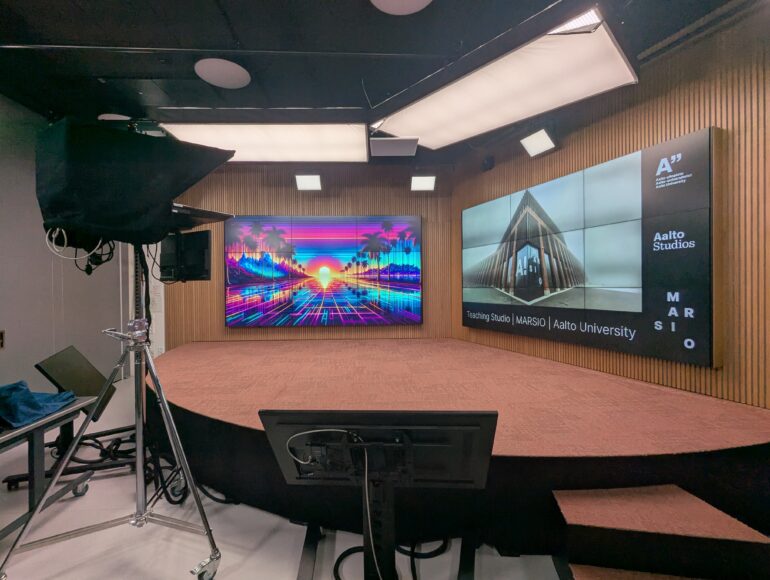
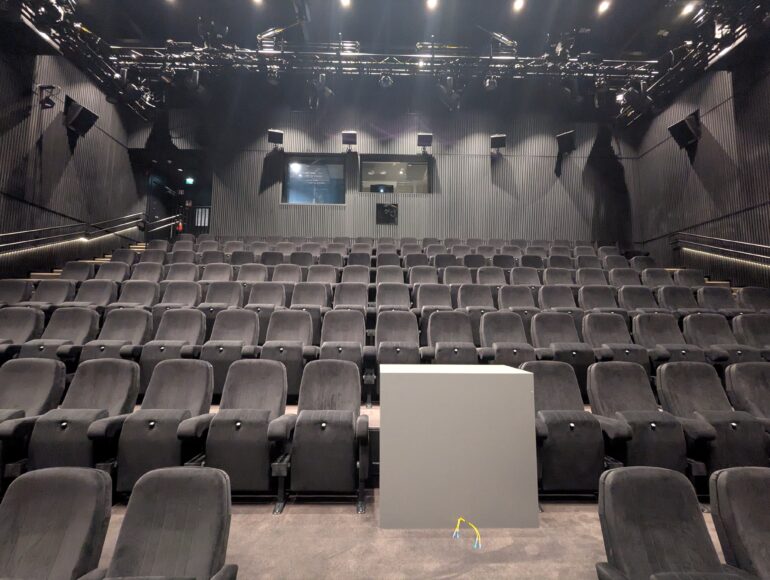
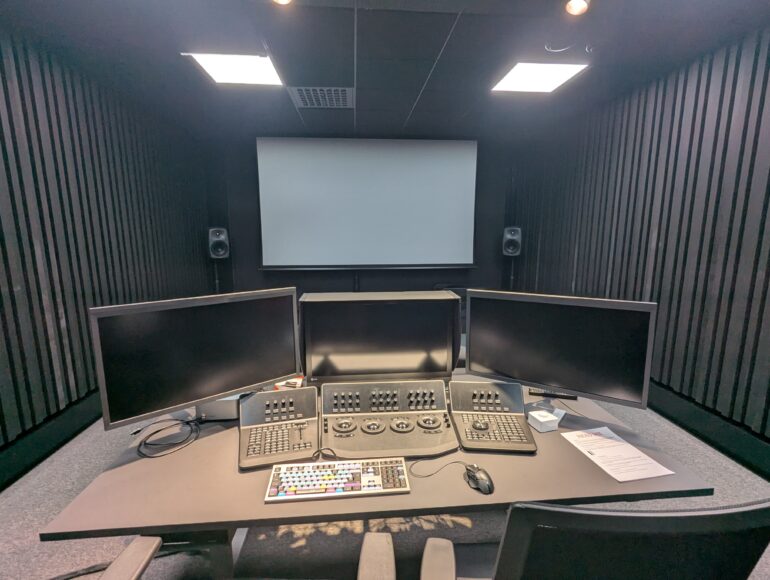
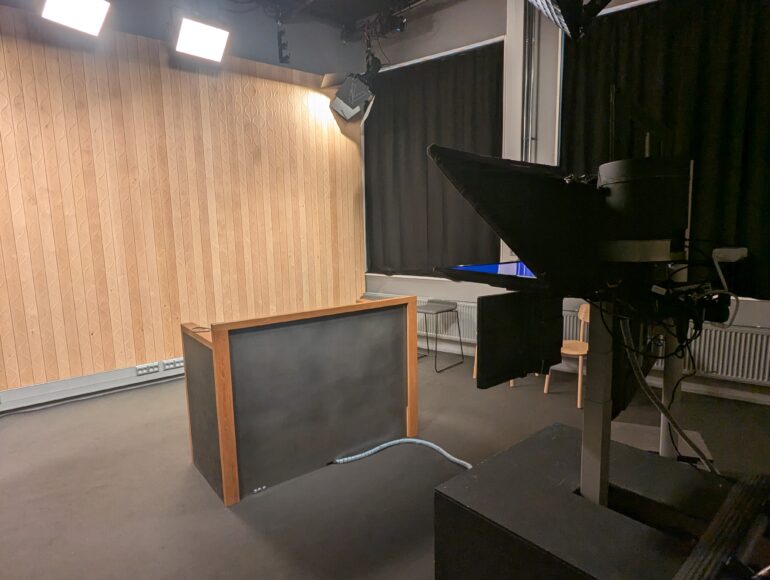
The technology requirements were extensive and covered a wide range of systems and devices. The solution includes a full-fledged broadcast PCR (Production Control Room) and CAR (central apparatus room), multiple large studio spaces, numerous smaller project studios, audio laboratories, post-production editing suites, and even a full Dolby Atmos cinema (also intended for e-sports events, among other uses).
The project involved far more than simply researching brands or reading glossy marketing brochures. We actively contacted vendors, arranged meetings, and organized proof-of-concept sessions to test whether the technologies could meet the requirements of Aalto University’s future campus.
In addition to selecting the appropriate equipment and collaborating on workflow design, we produced comprehensive system diagrams and CAD designs for all power, network, and fiber cabling across both campuses. These materials served as the technical foundation for future contractors.
Quite a bit of requirement mapping indeed!
Considering the design
After familiarizing ourselves with the concept and goals, we began making decisions regarding the infrastructural approach. A “no-limits” solution was not an option, as the budget had to be carefully controlled, and the campuses were not mission-critical 24/7 facilities.
One key challenge was Aalto’s requirement for 4K format. In a system that potentially carries hundreds of 4K signals, bandwidth blocks your way quite quickly. Implementing the entire solution with ST 2110 would have been demanding in terms of both network capacity and budget, as it would require a dedicated, very high-bandwidth media network. And in this case post-production workflows and related file transfers needed to be considered.
This narrowed the main options to NDI and 12G-SDI. But which direction should we lean toward? Baseband is traditionally seen as the “safe” choice, but NDI offers several advantages of modern IP workflows: embedding additional data for PTZ cameras, flexible routing via the network, and reduced need for a central router. Baseband devices could be converted at the edge, while making NDI a compelling option worth exploring seriously.
The end users would not be technical engineers, but lecturers or students, often on a temporary basis. At the same time, campus specialists would still require access to more advanced workflows that are hidden beneath simple, intuitive user interfaces provided by the control systems.
Vendor pondering
We contacted all relevant vendors, consulted them about technical capabilities, requested demo units, arranged for their specialists to come to Finland for demonstrations and selectively executed PoCs, and scheduled a heavy round of meetings during the 2022 IBC trade show in Amsterdam. By the end of this process, we felt confident that we had a solid set of devices and solutions to base our decisions on.
Some choices were more obvious than others. With certain devices, we had substantial previous experience and could recommend them without hesitation. In other cases, the direction was influenced by Aalto’s existing familiarity with specific equipment. This basically meant devices they had already invested in and for which their specialists possessed strong understanding. A complete overhaul of core technologies was neither necessary nor practical.
And, of course, at some point the search had to end, as the formal tender process needed to begin.
Sailing the right way
After the initial design, we took a step back to evaluate the entire setup from a higher-level perspective. The key question was whether the facility should embrace network based NDI or follow a more traditional baseband-oriented approach.
We identified several challenges with a fully NDI-based infrastructure. The facility would require multiple graphics workstations outputting high-bandwidth 4K NDI streams, each demanding powerful NICs and consuming several hundred megabytes per second. These streams would need to be distributed to many destinations. There was also no broadcast controller capable of acting as a central NDI router and manufacturers would have to develop the feature. Hardware wise a large number of NDI-to-SDI/HDMI converters would also be needed, as at the time no reliable, cost-effective high-channel bridges existed.
Managing a network carrying hundreds of NDI streams is still uncommon in practice, and Aalto initially lacked dedicated personnel to maintain such an environment. As Aalto was running the NDI POC Hybrid Stage setup in their Learning Center at the time, hands-on experiences of these challenges related to larger-scale NDI environments were in place to inform the design and decision-making.
With all this in mind, we made a course adjustment. The “vessel” was turned toward single-link 12G-SDI, which was considered a safer option.
This meant selecting a 12G router and converting all outbound video signals to single-mode fiber in order to extend range. Running 12G-SDI would have needed quite expensive and thicker cables to be run in electric format. Anyway, a large amount of fiber multicore cabling would be installed all around the large campus and electrical format would mainly be used inside the CAR or other rooms after conversion. Single-link 12G-SDI is a well-proven format which we could rely on.
Instead of using large bundles of individual fiber strands or MPO-style cabling, we opted for fiber multiplexing. It allows a single fiber pair to connect multiple device types – not just video. For example, one of the 300 m² event spaces required mobile production desks equipped with KVMs, intercoms, video monitors, PTZ controllers, switcher panels, and audio consoles.
All in all, NDI would still play an important role as one of the core technologies. All of the campus’s third-floor studios would run on NDI, as Aalto had suitable TriCaster “pro studio in a box” devices available.
Final thoughts
The design project was a long process where we made a quite detailed plan of two campuses, out of which one was built, installed, and configured to be in full production use.
Like in any large-scale project, at the beginning everything is calm and everybody is scoping for options. But after about halfway through, the throttle needs to be pushed, the overall design approach locked, and vendors selected. Of course, last time adjustments can be made where it’s safe, but bold decisions are key to success in large projects like these.
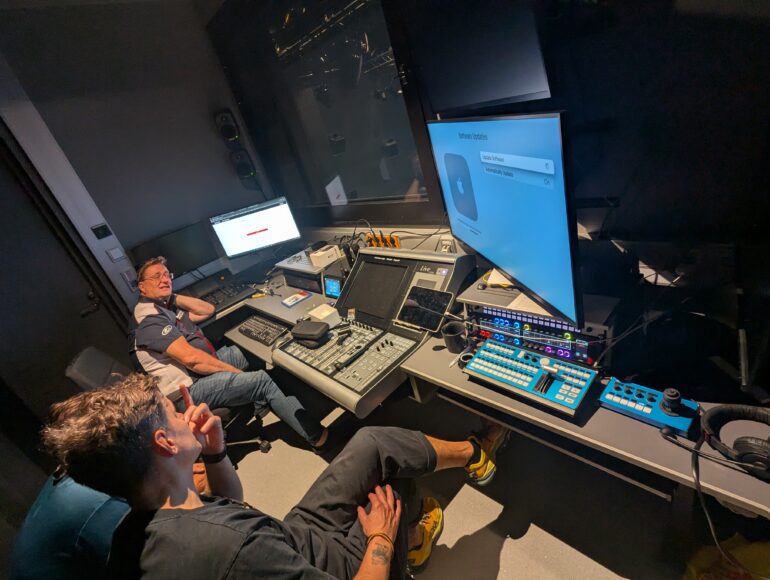
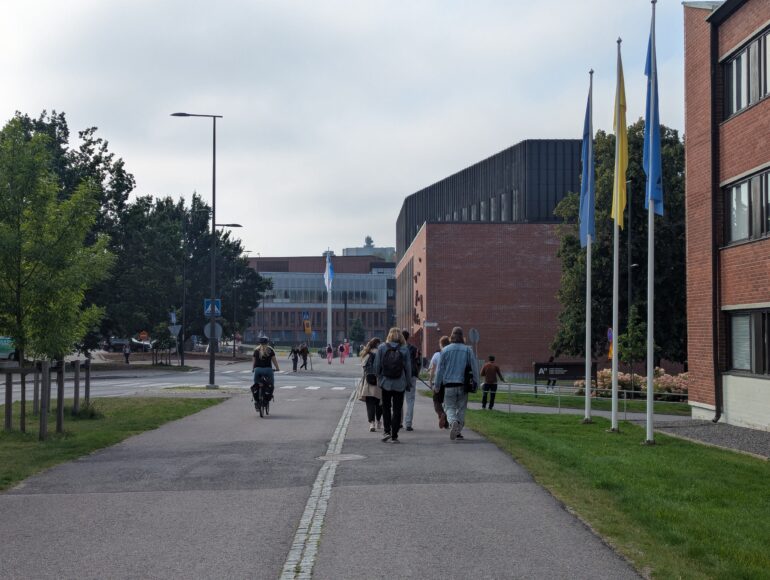
After a long while, I went to see the result at the Marsio campus, feeling all nostalgic as I walked through multiple studios and PCRs. During the commute and discussions one phrase repeated over and over again: “…just as we designed it to be.”
Reach out to us!
 Media Technology Team
 Media Technology Team
 Sales & Customer Relations Team
 Sales & Customer Relations Team